Best Scalping Indicators for TradingView (5-Minute Guide)
Fast trades demand fast, clean reads. The indicators that work on the 1–5 minute chart — a simple framework — and the costly mistakes that quietly bleed scalpers dry.
The best scalping indicators are fast and few: VWAP (intraday bias), a fast EMA ribbon (9/20 or a stack of short EMAs for trend), a momentum tool (RSI or Stochastic for timing), and volume (to avoid dead, choppy zones). On a 1–5 minute chart you have seconds to decide — so the winning edge is a clean, instant read and ruthless risk control, not more indicators.
Scalping is the fastest style of trading: dozens of small trades, holding seconds to minutes, taking tiny slices out of the market. It's also the most unforgiving — spreads, fees, and slippage eat scalpers alive, and there's no time to deliberate. So the indicator toolkit has to be lean and the decision near-instant. This guide gives you both.
The 4 scalping indicators that matter
1. VWAP — instant bias
On a scalping chart, VWAP is your one-glance bias. Above it, you favor longs; below it, shorts. Many of the cleanest scalps are quick rejections or reclaims of VWAP. It tells you the intraday side without thinking.
2. Fast EMA ribbon — micro-trend
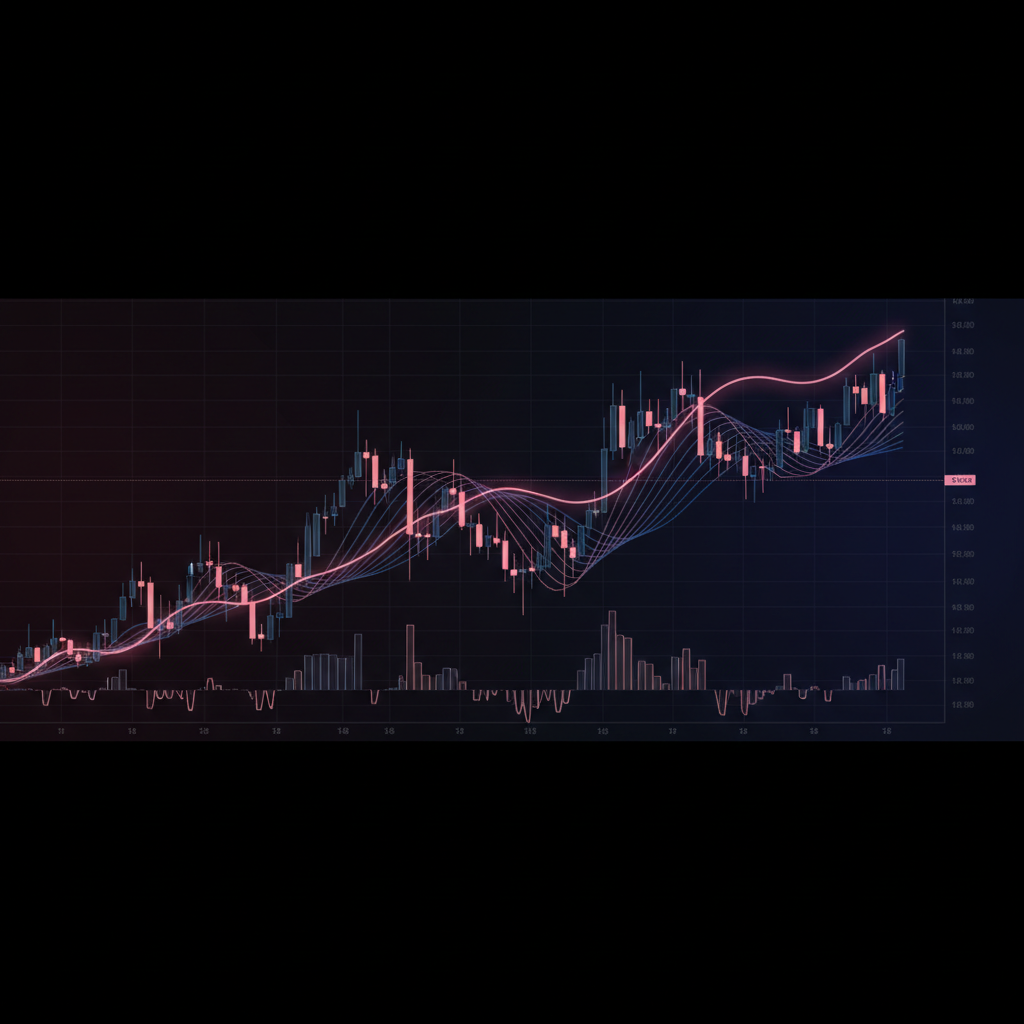
A few short EMAs (like 9 and 20, or a tight ribbon) show the immediate trend at a glance. Stacked and fanning out = momentum; tangled together = chop, stand down. The ribbon's angle is your speedometer.
3. Momentum (RSI / Stochastic) — timing
A fast momentum oscillator times your entries and warns when a quick pop is overextended. On low timeframes it fires often, so it's a timing helper within your VWAP + ribbon bias — never a standalone trigger.
4. Volume & squeeze — energy
Scalping needs movement. Volume confirms a move is real, and a squeeze (volatility compressing, then releasing) often precedes the sharp expansions scalpers live for. No energy, no trade.
The scalper's real problem: no time to think
Here's what makes scalping so brutal: by the time you've checked four indicators, weighed them, and decided, the setup is gone. Scalping rewards an almost instant read — and that's exactly where most scalpers break down, second-guessing themselves while the candle closes against them. The bottleneck isn't knowledge; it's speed of synthesis.
🐐 One Score + Squeeze Pulse for instant reads
This is precisely where a single, fast read earns its keep. The G.O.A.T. Toolkit on Algoat.TV collapses 250+ technical-analysis evidence points — trend, momentum, volume, volatility and more — into one 0–100 Score across 8 scoring engines, and its Squeeze Pulse flags compression and release in real time. On a 1–5 minute chart, that means you read the strength of a setup in a glance instead of mentally juggling four panels.
It won't tell you to buy or sell — it gives you a fast, unbiased read so you can pull the trigger in time. At scalping speed, that clarity is the whole game.
A simple 5-minute scalping framework
Set bias with VWAP
Above VWAP, only scalp longs. Below, only shorts. One glance decides which side you're hunting.
Confirm trend with the ribbon
EMAs stacked and angled in your direction? Green light. Tangled? No trade — wait for it to fan out.
Demand energy
Only engage when there's volume and a clean expansion (ideally out of a squeeze). Skip the dead chop.
Time the entry, set a tight stop
Enter on a momentum reset in your direction. Stop is small and pre-defined — scalping lives or dies on tight risk.
Take profit fast, don't get greedy
Scalps are small wins, taken quickly. Hit your target, bank it, reset. Overstaying turns winners into losers.
5 mistakes that destroy scalpers
Ignoring fees and spread. At dozens of trades a day, costs compound brutally. A strategy must clear them to be profitable.
Scalping the chop. No trend, no volume = no edge. Most scalping losses come from forcing trades in dead conditions.
Loose stops. A wide stop on a tiny target destroys your risk-to-reward. Scalping demands tight, mechanical stops.
Overtrading / revenge trading. The speed is addictive. Set a daily trade cap and a loss limit, and honor them.
Letting a scalp become a "hold." If it goes against you, take the small loss. Hope is not a scalping strategy.
Frequently asked questions
QWhat is the best indicator for scalping?
There's no single best one — scalpers use a small, fast set: VWAP for bias, a fast EMA ribbon for micro-trend, a momentum oscillator for timing, and volume/squeeze for energy. The priority on low timeframes is speed of read and tight risk, not adding more indicators.
QWhat timeframe is best for scalping?
Most scalpers work the 1-minute to 5-minute charts, sometimes with a 15-minute for context. The 5-minute is a popular balance — fast enough for many setups, slow enough to avoid the worst of the noise on the 1-minute.
QIs scalping good for beginners?
Generally no — scalping is the hardest style to start with. It demands fast decisions, strict discipline, and tight cost control, and the high trade frequency amplifies both mistakes and fees. Most traders are better served learning on higher timeframes first.
QHow do I read indicators fast enough to scalp?
Reduce the number of separate reads. A tool like Algoat.TV's G.O.A.T. Toolkit compresses 250+ technical readings into one 0–100 Score with a real-time Squeeze Pulse, so you assess setup strength at a glance instead of mentally combining four indicators under time pressure.
QWhat is a squeeze and why does it matter for scalping?
A squeeze is when volatility compresses into a tight range, often before a sharp expansion. Scalpers watch for the release because that's where the quick, tradeable moves happen. Algoat.TV's Squeeze Pulse flags this compression and release in real time.
Read the setup in a glance — not in four panels.
One 0-100 Score + a real-time Squeeze Pulse, built for speed. Free for 7 days.
🚀 Start Your 7-Day Free TrialDisclaimer: This article is educational and not financial advice. Scalping is a high-risk, high-frequency style that may not be suitable for most traders. Algoat.TV indicators are quantitative analysis tools — they do not provide trade signals, recommendations, or guaranteed outcomes. Trading involves risk of loss. Always do your own research and trade your own plan.